
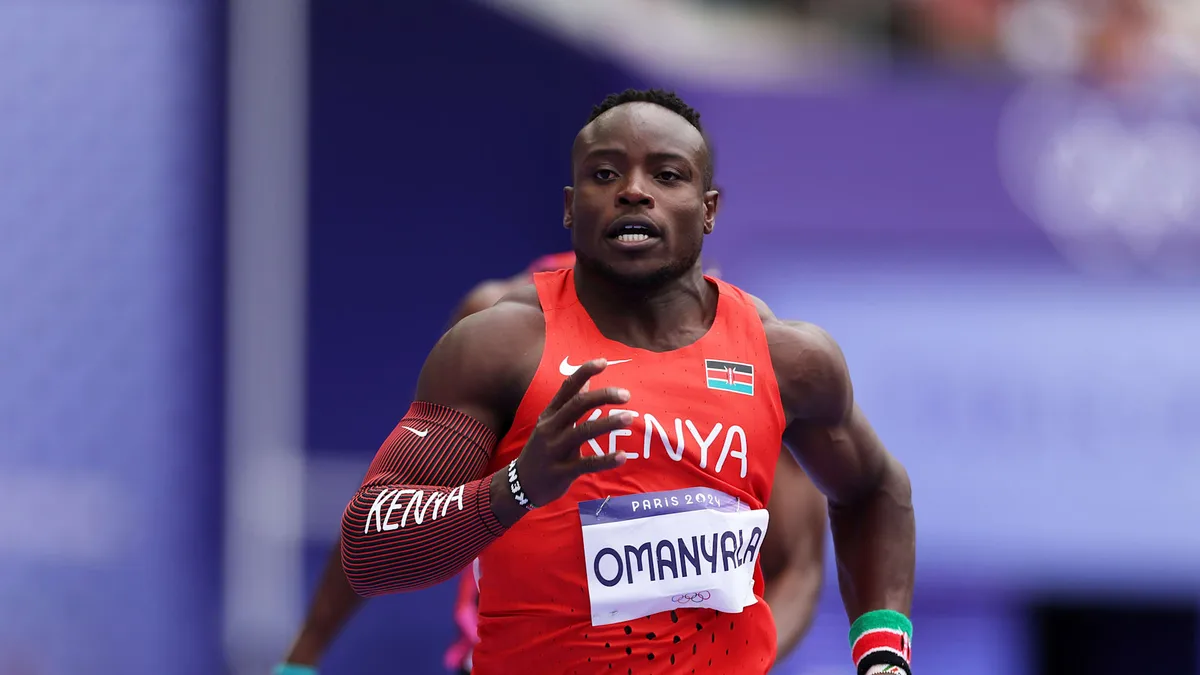
The Strategic Pivot: Beyond Middle-Distance Hegemony
For decades, the Kenyan athletics machine has functioned like a high-precision clock, calibrated almost exclusively for the 800m through 10,000m events. However, the 2026 calendar forces a radical departure from this singular focus. With the World Relays and the African Championships occurring in a compressed window, Athletics Kenya (AK) faces a logistical and tactical nightmare that threatens to expose the fragility of its current training infrastructure.
The shift toward relay proficiency is not merely a preference; it is a survival requirement. World Athletics has increasingly incentivized relay participation through lucrative qualification slots for global championships, forcing AK to move away from the 'lone wolf' training model. This transition requires a fundamental change in how athletes are scouted, moving from the high-altitude camps of Iten toward specialized sprint-relay hubs that have historically been neglected.
Data from the 2024 season suggests that Kenyan relay teams are currently underperforming relative to their individual talent pools. While individual 400m times have improved by an average of 1.2% over the last three years, the baton exchange efficiency—measured by split-time consistency—remains in the bottom quartile of global rankings. The 2026 trials will serve as the primary filter to identify athletes capable of operating under the high-pressure, high-velocity demands of the 4x400m and mixed relay formats.
SPONSORED


The pressure on the selection committee is immense. They must balance the need for established stars, who often prioritize Diamond League circuits, against the hunger of emerging talent. If AK fails to secure podium finishes in the 2026 World Relays, the financial repercussions—specifically regarding World Athletics development grants—could be catastrophic for the federation’s grassroots programs.
The Logistics of Dual-Peak Performance
The 2026 schedule creates a unique physiological challenge for Kenyan athletes. The World Relays, typically held in the early season, require a peak that is fundamentally different from the endurance-heavy requirements of the African Championships. Training for a 400m relay leg requires explosive anaerobic power, whereas the African Championships often demand tactical, aerobic-heavy racing in the 5,000m or 10,000m events.
AK’s coaching staff, led by technical director Julius Kirwa, has historically favored a 'one-size-fits-all' training camp approach. This methodology is increasingly criticized by sports scientists who argue that the lack of periodization tailored to individual event groups is causing premature burnout. In 2026, the federation must decide whether to split the national team into specialized cohorts or continue the traditional centralized camp model that has served them for forty years.
The financial burden of maintaining these camps is significant. According to internal budget documents leaked during the 2023 season, AK spends approximately 65% of its annual operational budget on camp logistics, leaving little room for sports science innovation or specialized relay coaching. To succeed in 2026, the federation must pivot toward a decentralized model that allows athletes to train in environments that match their specific event requirements, rather than forcing marathoners and sprinters into the same high-altitude training blocks.
Scouting and the Talent Pipeline Crisis
The talent pipeline in Kenya is currently suffering from a 'middle-distance bottleneck.' While the country produces an abundance of 1,500m and 5,000m runners, the depth in the 200m and 400m categories is alarmingly thin. The 2026 trials will likely see a desperate attempt by AK to convert middle-distance runners into relay specialists, a strategy that has yielded mixed results in the past.
The conversion of an 800m runner to a 400m relay leg is fraught with technical risk. The biomechanical requirements of a 400m sprint—specifically the stride frequency and ground contact time—are vastly different from the aerobic efficiency required for the 800m. Without a robust pipeline of pure sprinters, AK is essentially attempting to build a house on a foundation of sand. The 2026 trials will be the first real test of whether the new 'Sprint Development Program' initiated in late 2024 has actually produced a new generation of athletes.
Furthermore, the influence of private management agencies cannot be ignored. Many of Kenya’s top-tier athletes are under contract with international agencies that prioritize Diamond League appearances over national team duties. This creates a conflict of interest during the trials. If an athlete is forced to choose between a lucrative European circuit and the 2026 African Championships, the federation often finds itself with a depleted roster. The 2026 trials will require a new, ironclad contract structure that mandates national service in exchange for federation-backed visa and travel support.
The Economics of Athletics Kenya
The financial health of Athletics Kenya is inextricably linked to its performance on the global stage. World Athletics distributes funding based on a complex matrix of participation, medal counts, and anti-doping compliance. With the recent scrutiny regarding the integrity of Kenyan distance running, the pressure to perform clean and win big in 2026 is at an all-time high. The federation is currently under a 'monitoring' status by the Athletics Integrity Unit (AIU), which adds another layer of complexity to the selection process.
The 2026 trials will be the most scrutinized event in the federation's history. Every athlete selected will undergo rigorous out-of-competition testing in the six months leading up to the games. This is not just a sporting requirement; it is a political one. If a scandal were to emerge from the 2026 team, it could lead to a total suspension of funding, effectively ending the careers of hundreds of young athletes who rely on the federation for their livelihood.
Ultimately, the 2026 World Relays and African Championships represent a crossroads. The federation can either continue to rely on the fading glory of its distance-running heritage or embrace a more modern, scientific, and diversified approach to athletics. The trials will reveal whether the leadership at Riadha House is capable of this transition or if they remain shackled to the methods of the past. The stakes are not just medals; they are the future of the sport in the region.
Technological Integration in Training
The integration of wearable technology and data analytics into the 2026 preparation cycle is a long-overdue development for Athletics Kenya. Historically, training in Kenya has been based on 'feel' and tradition, with coaches relying on stopwatches and intuition. However, the 2026 cycle marks a shift toward data-driven performance monitoring, utilizing heart-rate variability (HRV) and lactate threshold testing to optimize recovery cycles.
By implementing real-time data tracking, the coaching staff can identify overtraining syndrome before it leads to injury. This is particularly crucial for the relay teams, where a single injury can collapse the entire unit. The 2026 trials will likely incorporate these metrics as part of the selection criteria, moving beyond simple race times to include physiological readiness scores. This represents a significant departure from the traditional 'winner-takes-all' trial format.
However, the adoption of this technology is uneven across the country. While elite athletes in Nairobi-based camps have access to these tools, those in the rural Rift Valley camps often do not. This creates a two-tier system that could lead to regional resentment and a lack of cohesion within the national team. To ensure a fair selection process for the 2026 World Relays, AK must standardize the access to performance-tracking technology, ensuring that every athlete has the same opportunity to demonstrate their physiological potential.
FAQ
What is the primary challenge for Athletics Kenya in the 2026 season?
The primary challenge is the logistical and physiological conflict between preparing for the high-intensity, anaerobic demands of the World Relays and the endurance-focused African Championships.
How does the 'middle-distance bottleneck' affect relay performance?
Kenya's heavy reliance on middle-distance talent leaves a deficit in pure sprint specialists, forcing the federation to convert 800m runners into relay legs, which often results in poor baton exchange and sub-optimal sprint biomechanics.
What role does the Athletics Integrity Unit (AIU) play in the 2026 trials?
The AIU maintains a 'monitoring' status over Kenyan athletics, meaning all athletes selected for the 2026 team must undergo rigorous out-of-competition testing to ensure compliance and avoid funding suspensions.
Why is the shift to a decentralized training model being proposed?
The current centralized camp model is criticized for its lack of periodization and inability to cater to the specific needs of different event groups, such as sprinters versus long-distance runners.
