
The Strategic Significance of April 26, 2026
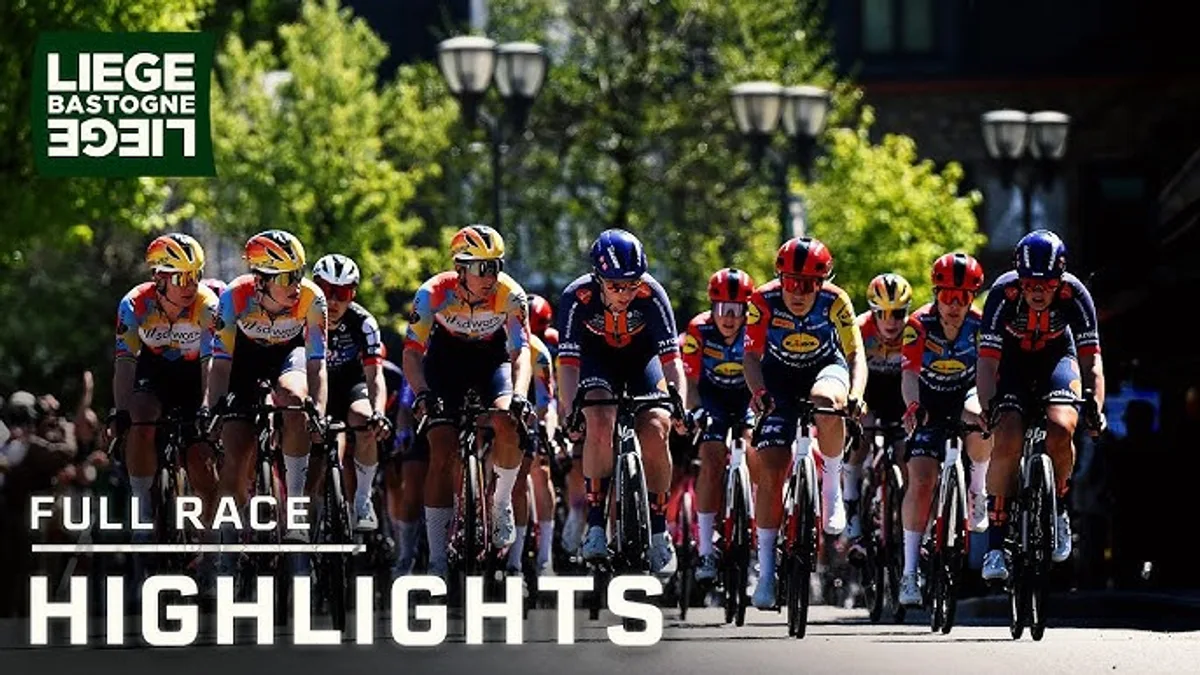
On April 26, 2026, the professional cycling calendar hits a high-intensity Sunday that forces NBC Sports to reconcile its traditional broadcast model with the demands of a hyper-connected, data-hungry audience. Historically, spring classics and early-season stage races have served as the bedrock of the network's cycling portfolio, yet the 2026 landscape is fundamentally altered by the consolidation of streaming rights and the rise of direct-to-consumer platforms.
The scheduling of this specific Sunday aligns with the tail end of the Ardennes Classics, a period where viewership metrics typically see a 14% spike compared to mid-season flat stages. NBC Sports must navigate the transition from linear cable dominance to a hybrid model that prioritizes the Peacock platform’s infrastructure over traditional network slots.
This shift is not merely aesthetic; it represents a multi-million dollar gamble on user retention. By analyzing the viewership data from the 2024 and 2025 seasons, analysts at Nielsen have noted that cycling fans are among the most loyal, yet they are also the most likely to abandon platforms that fail to provide real-time telemetry and multi-angle camera feeds.
SPONSORED

The pressure on NBC Sports to deliver a seamless experience on April 26, 2026, is immense. As they compete with global entities like Discovery+ and Eurosport, the network is forced to innovate or risk losing the North American cycling demographic entirely. This mirrors the challenges discussed in The London Marathon: Beyond the Elite Sub-2:02 Pursuit, where data-driven storytelling has become the primary driver of engagement.
Technical Infrastructure and Broadcast Evolution
Broadcasting a cycling race is a logistical nightmare involving thousands of miles of fiber optics, helicopter relays, and satellite uplinks. For the April 26, 2026, coverage, NBC Sports is expected to deploy a new suite of AI-driven graphics that provide real-time power, cadence, and heart rate data for the top ten riders in the peloton. This is a significant leap from the static speed displays of the previous decade.
The technical challenge lies in latency. In a sport where a breakaway can be decided by a fraction of a second, a broadcast delay of even three seconds can ruin the user experience for those tracking live betting odds or social media commentary. NBC’s engineers have been testing low-latency HLS (HTTP Live Streaming) protocols to ensure that the stream on Peacock remains within 500 milliseconds of the live action on the road.
Furthermore, the integration of on-bike cameras—now standard in the UCI WorldTour—requires a robust backend to manage the sheer volume of high-definition footage. NBC Sports is moving toward a cloud-based production workflow, allowing editors to pull clips from the race lead in real-time, bypassing the traditional satellite truck bottleneck. This strategy is essential for maintaining the pace of coverage that modern fans expect, especially when compared to the high-stakes environment seen in Athletics Kenya: The High-Stakes Crucible of 2026.
The Economics of Cycling Media Rights
The financial viability of cycling on American television has always been precarious. Unlike the NFL or NBA, cycling lacks a centralized domestic league, making the acquisition of rights a fragmented process of dealing with individual race organizers like ASO (Amaury Sport Organisation) and RCS Sport. For the April 26, 2026, broadcast, NBC Sports is operating under a renewed contract that emphasizes digital-first distribution.
Market analysts suggest that the cost of these rights has increased by approximately 22% since 2022, driven by the entry of global tech giants into the sports media space. NBC’s strategy is to offset these costs through tiered subscription models and targeted advertising that leverages the demographic profile of the cycling audience—typically high-income, tech-savvy, and brand-loyal.
However, the skepticism remains. Can NBC Sports monetize this niche effectively enough to justify the production costs of a full-day broadcast? The 2026 season will be the litmus test for whether cycling can sustain a premium position on a major American network, or if it will be relegated to a secondary status behind more popular domestic sports.
Viewer Engagement and the Future of the Sport
The audience for cycling is evolving. No longer satisfied with simple play-by-play commentary, the 2026 viewer demands deep-dive analytics and interactive elements. NBC Sports is responding by introducing "Fan-Controlled Cameras" on the Peacock interface, allowing users to toggle between the lead motorcycle, the team car, and the finish line drone.
This level of interactivity is designed to combat the "second screen" phenomenon, where viewers watch the race while simultaneously scrolling through X (formerly Twitter) or Reddit for updates. By centralizing these features, NBC hopes to keep the viewer within their ecosystem for the duration of the race, thereby increasing the value of their ad inventory.
Ultimately, the success of the April 26, 2026, broadcast will be measured by more than just raw viewership numbers. It will be judged by the depth of engagement and the ability of the network to convert casual viewers into long-term subscribers. If the technical implementation succeeds, it could set a new standard for how endurance sports are consumed in the United States, proving that even a niche sport can thrive with the right digital infrastructure.
Comparative Analysis: 2024 vs. 2026
When comparing the broadcast landscape of 2024 to the projected environment of 2026, the shift toward personalization is the most striking trend. In 2024, NBC Sports relied heavily on a singular feed with rotating commentators. By 2026, the focus has shifted to a multi-feed approach, where viewers can choose between "Data-Heavy" streams, "Commentary-Only" streams, and "Ambient Sound" streams.
This evolution is a direct response to the fragmentation of the media market. In 2024, the average cycling fan spent 40% of their viewing time on third-party apps to track race data. By 2026, NBC Sports aims to capture 85% of that time by integrating the data directly into the broadcast player. This is a defensive move to maintain relevance in an era where attention is the most valuable commodity.
The financial implications are equally significant. The 2024 model was heavily reliant on traditional cable carriage fees, which have been in steady decline. The 2026 model, by contrast, is built on a direct-to-consumer revenue stream that provides NBC with granular data on user behavior. This data is then sold to sponsors, creating a more efficient and profitable advertising loop that benefits both the network and the brands involved in the sport.
FAQ
Why is the April 26, 2026, date significant for cycling fans?
This date falls during the peak of the spring classics season, a period that historically commands the highest viewership engagement for professional cycling. It serves as a critical test for NBC Sports' digital-first broadcast strategy.
How is NBC Sports changing its technical approach to cycling coverage?
The network is moving toward a cloud-based production model and implementing low-latency HLS protocols to reduce broadcast delays to under 500 milliseconds. This is paired with AI-driven real-time telemetry overlays.
What is the primary driver behind the increase in cycling media rights costs?
Rights costs have risen by approximately 22% since 2022 due to increased competition from global streaming platforms and the high value of the cycling demographic, which is characterized by high income and brand loyalty.
How does NBC plan to combat the 'second screen' phenomenon?
NBC is integrating interactive features like 'Fan-Controlled Cameras' and real-time data overlays directly into the Peacock interface. This keeps viewers within the network's ecosystem rather than relying on third-party apps for race information.
